Glass Bottle Manufacturing Process – Ruisheng Glass

Ruisheng Glass is one of the leading liquor bottle manufacturers in northern China. We focus on the core product lines of super flint and high flint glass bottles, offering both standardized production and personalized customization services. Currently, we have over 10,000 existing bottle designs. Moreover, we can customize different capacity specifications according to customers’ ideas, combined with deep – processing techniques such as frosting, spraying, silk-screening, electroplating, and hot stamping. This can meet the packaging needs of various industries, including liquor, beverages, and perfumes, providing customers with a “one – stop” production service from mold manufacturing to post – decoration. From raw material selection to final inspection, our strict quality control ensures that every product meets safety and durability standards.
Get A Quote

Materials For Glass Bottle Manufacturing

We insist on using high-quality raw materials in the industry to guarantee product texture and safety from the source.

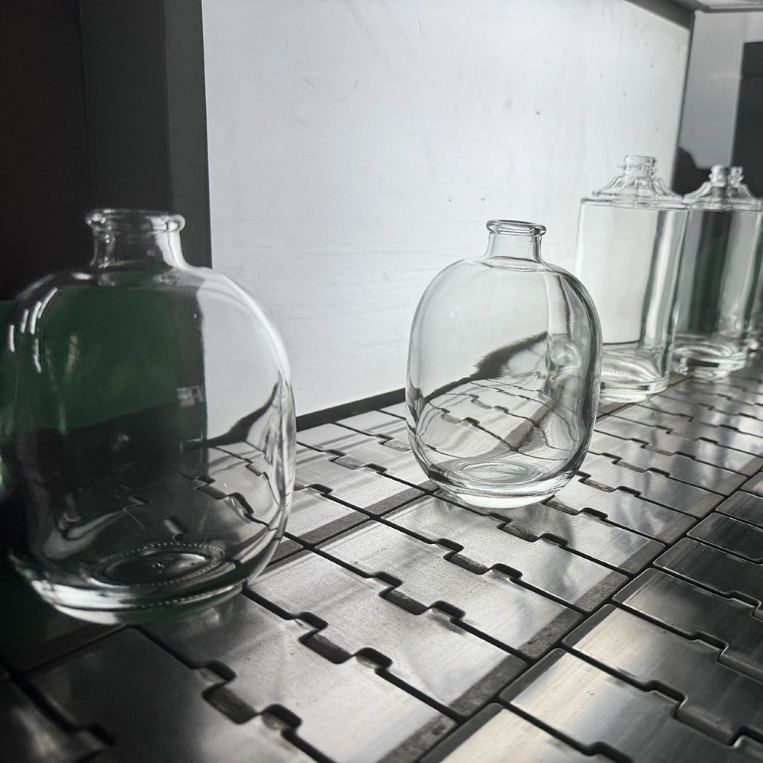
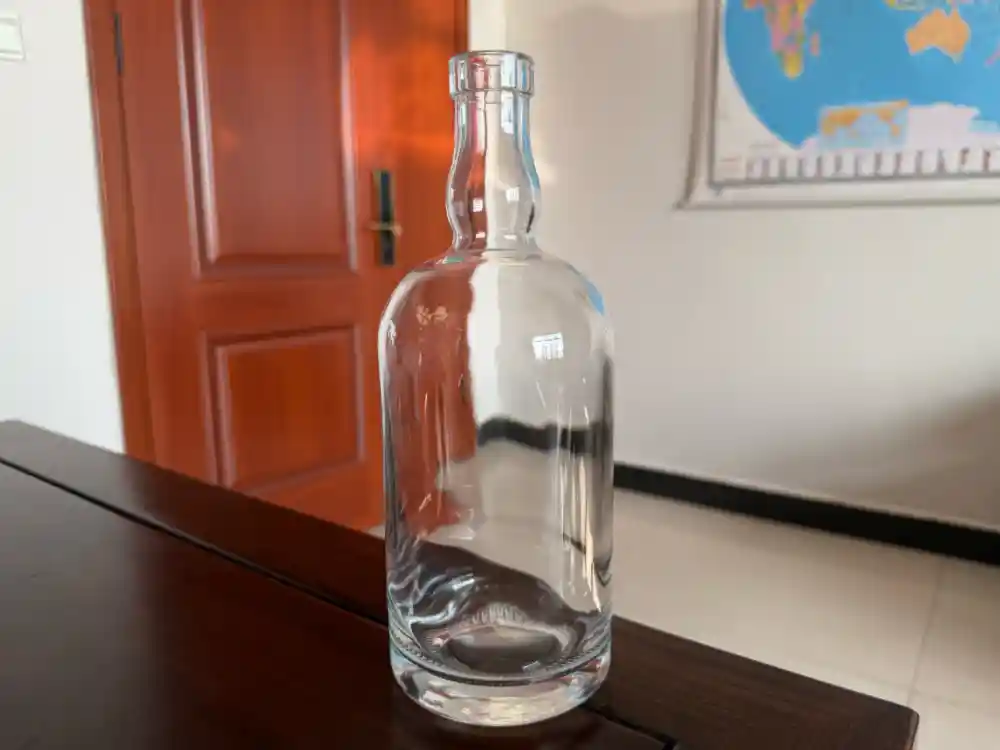
High Flint Glass: With a light transmittance of over 90%, it has a pure and bright color. It is highly resistant to acids and alkalis, boasting excellent chemical stability. The material has a uniform density, featuring outstanding compression and impact resistance. It is less likely to be damaged during transportation, reducing loss costs.

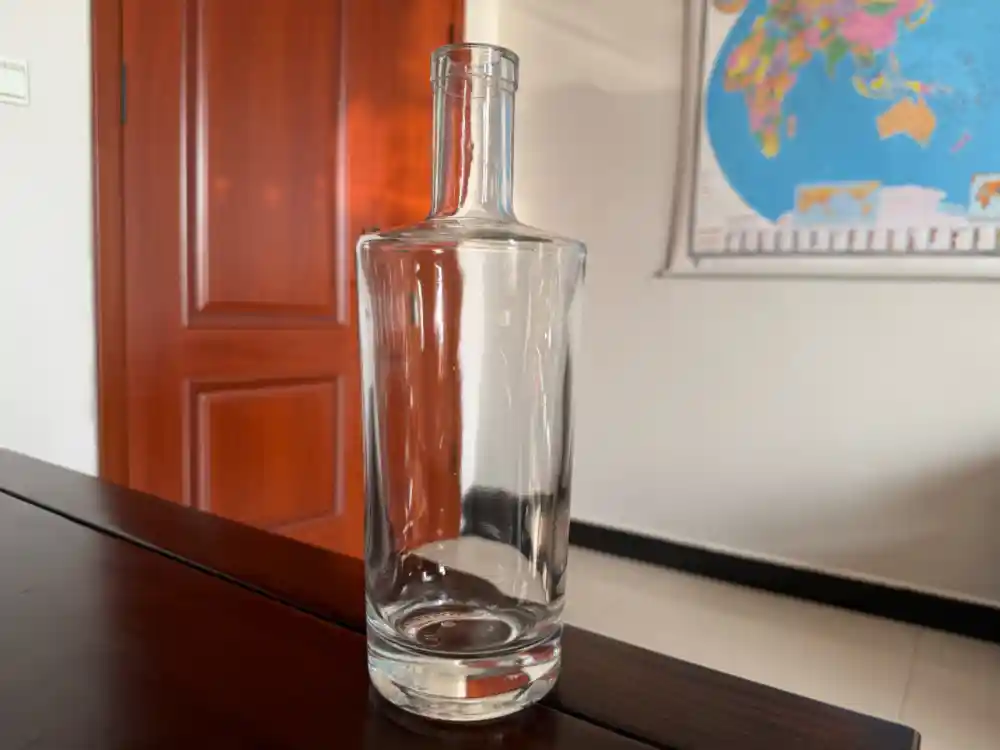
Crystal Flint Glass: Based on high-flint glass, its purity is further enhanced by an extremely low iron content. Its light transmittance is close to the texture of crystal, with better gloss. The bottle body is transparent and smooth. When combined with embossing or carving techniques, it can highlight the three-dimensional layering and refinement of patterns. This material can also enhance the high-end packaging texture of products and contribute to brand premium.

High-Flint-Glass
Crystal-Flint-Glass

How to Make Glass Bottles Step by Step

We possess 5 modern furnaces and more than 20 fully automated production lines, with a daily output of over 1 million bottles. This enables us to efficiently handle large volume orders while being flexible enough to cope with customized projects. Our in-house design team can quickly transform concepts into molds, providing integrated design, production, and delivery services.

Watch the Video

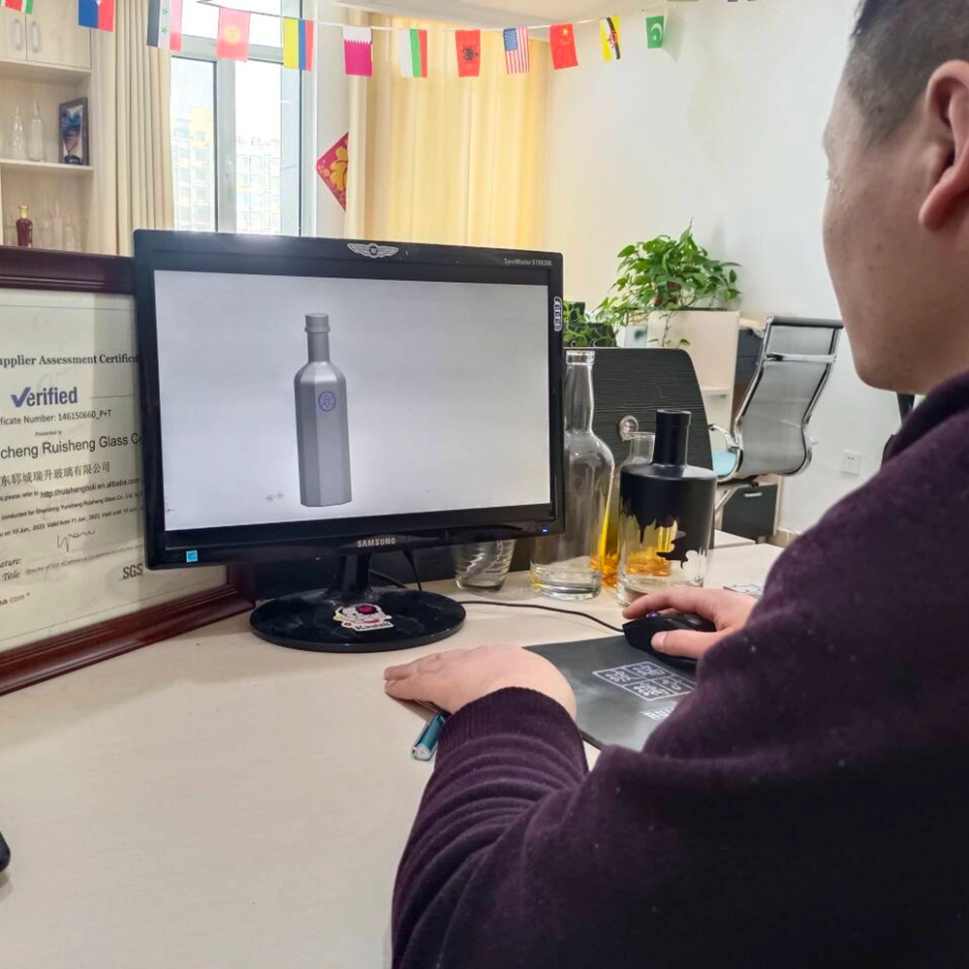
1. Glass Bottle Design Drawing

Our engineers will use professional software to draw detailed technical drawings and 3D models according to customers’ requirements, accurately marking the capacity, bottle shape, thickness, and decoration position. We will evaluate the forming process to ensure that the design is both aesthetically pleasing and manufacturable.

glassbottle_design

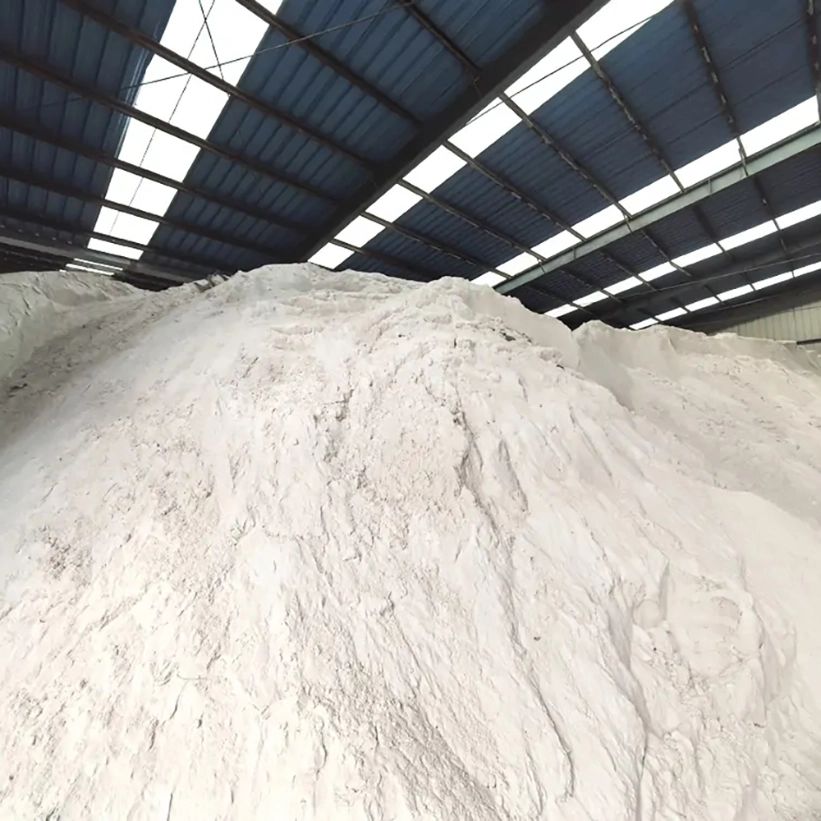
2. Materials for Producing Glass Bottles

The main raw materials, such as quartz sand, soda ash, and limestone, are weighed and mixed according to a strict scientific formula. For special bottles, dyes and chemical compounds may be added to produce colored glass or heat-resistant borosilicate glass.

Materials_for_making_glass_bottles

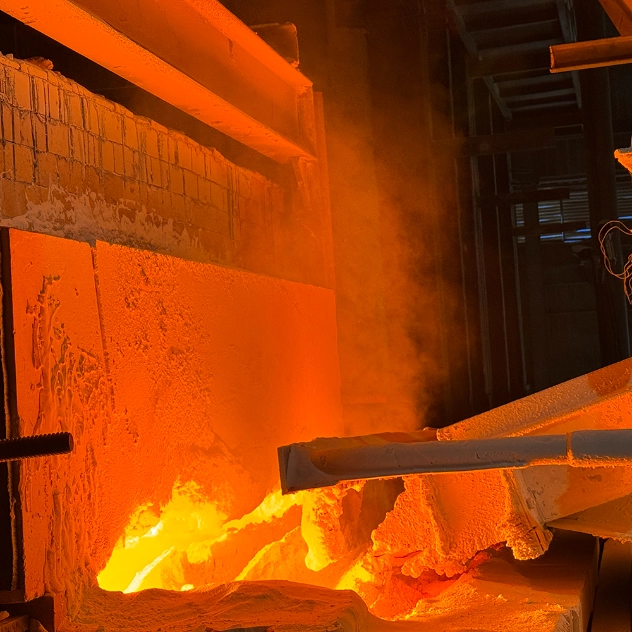
3. Adding Raw Materials to the Furnace

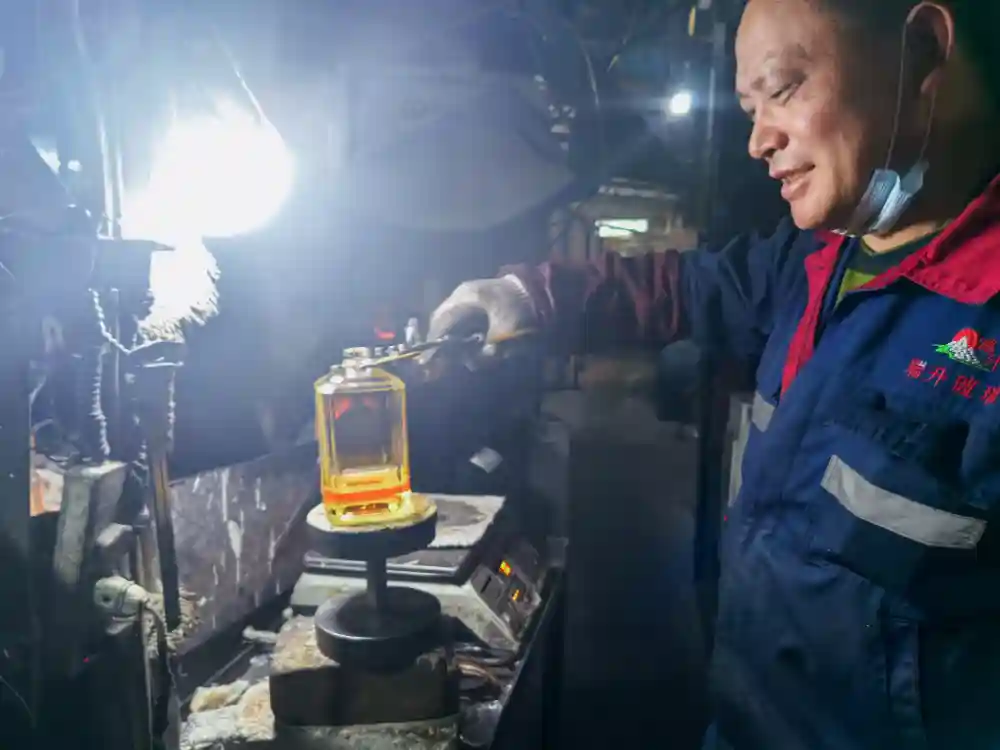
The well-mixed raw materials are continuously fed into a high-temperature furnace, where the temperature is maintained at 1550-1600℃. The raw materials are melted into a uniform liquid glass here.

Kiln_charging_during_glass_bottle_production_process

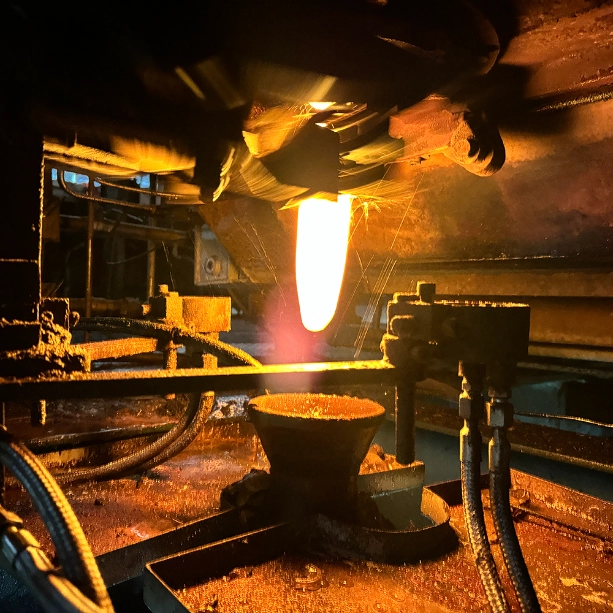
4. Machine Cutting of Materials

The molten glass flows into the forehearth for temperature adjustment, and then is cut into uniform gobs by precision shears. The weight of each gob directly affects the wall thickness and capacity accuracy of the final bottle.

Glass_bottle_production_process_machine_cutting

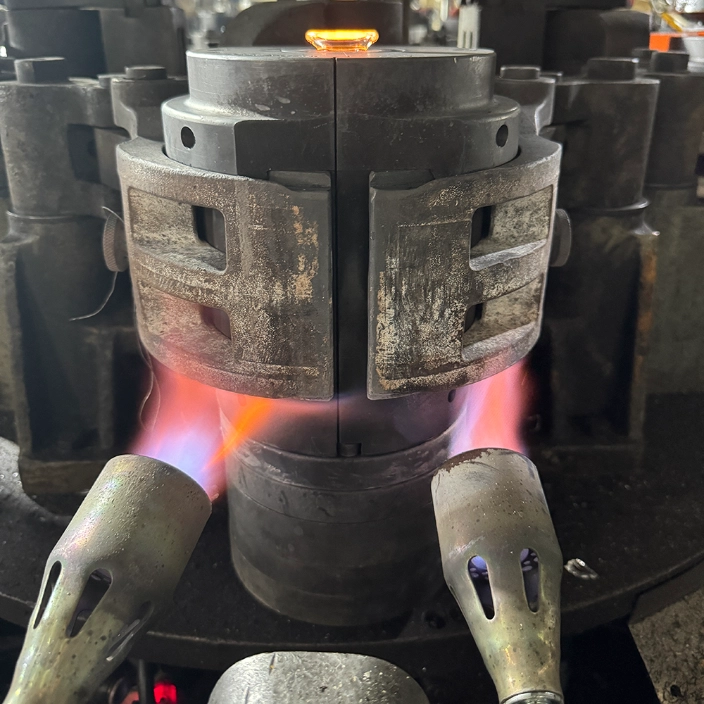
5. Mold Heating

The metal molds are pre-heated and maintained at an accurate temperature to ensure smooth glass flow, consistent forming, and a smooth surface finish.

Mold_heating_during_glass_bottle_production_process

6. Blank Mold Display

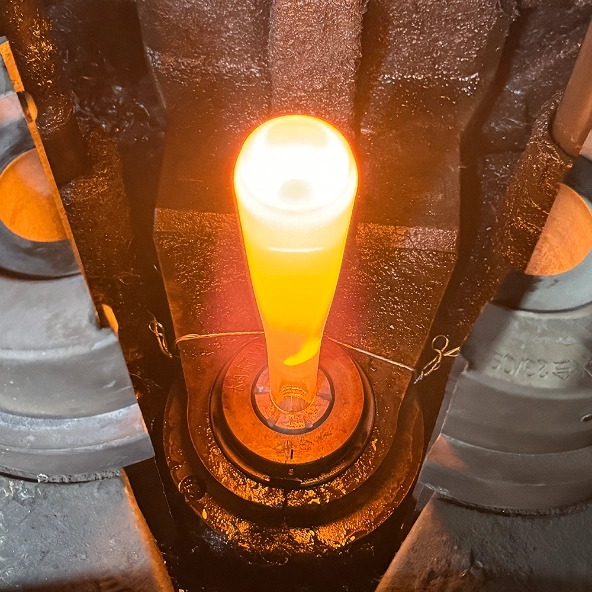
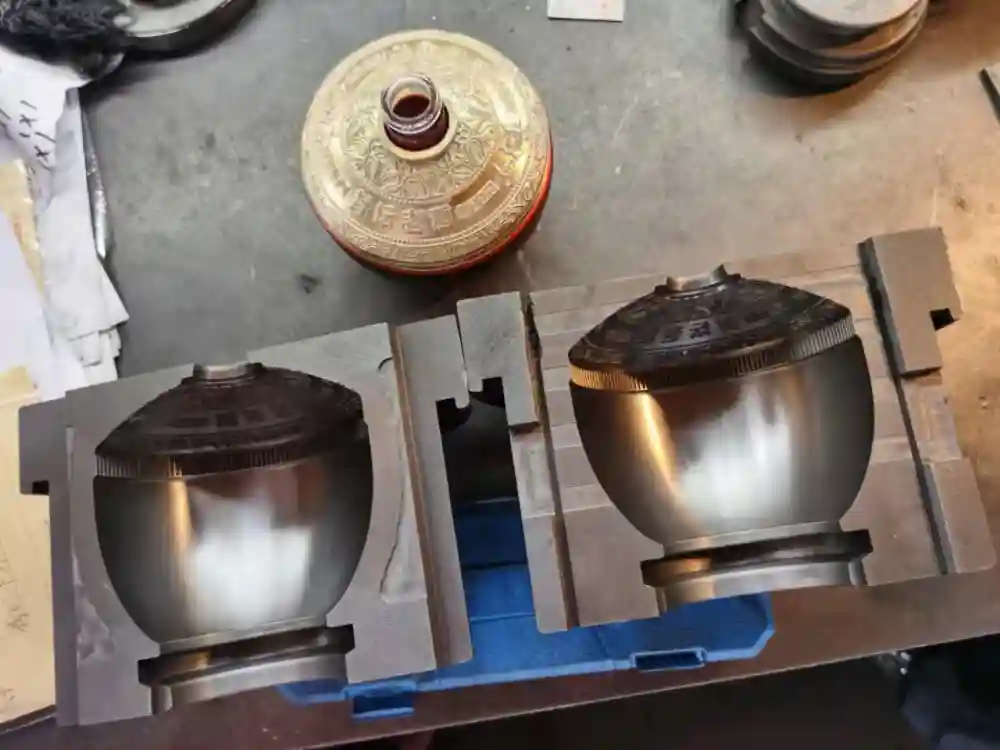
The gob enters the blank mold, and the neck and preliminary shape are formed through pressing or blowing methods. All the neck details, including the threads, are formed at this stage.

Preliminary_prototype_display_of_glass_bottle_production_process

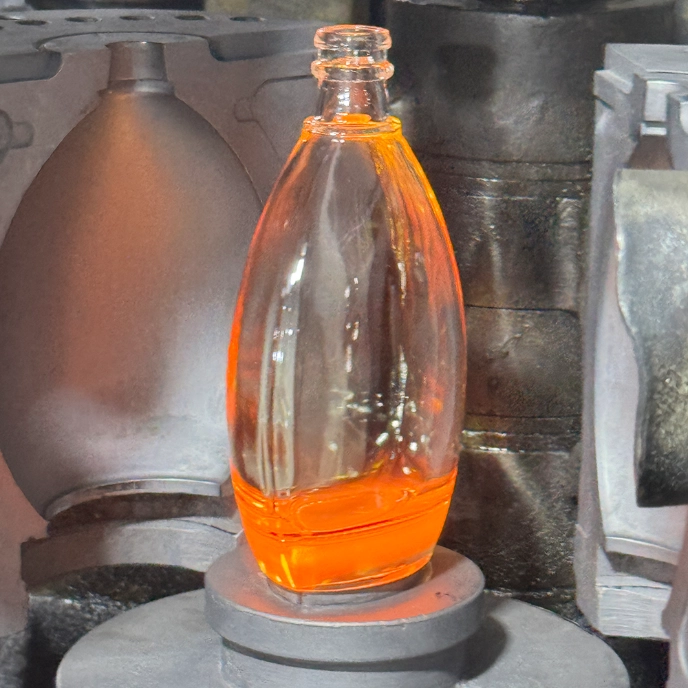
7. Mold Display

The parison is transferred to the blow mold, and high-pressure air inflates it to fit the mold walls, forming the final shape, including all embossed or engraved patterns.

Glass_bottle_production_process_mold_display

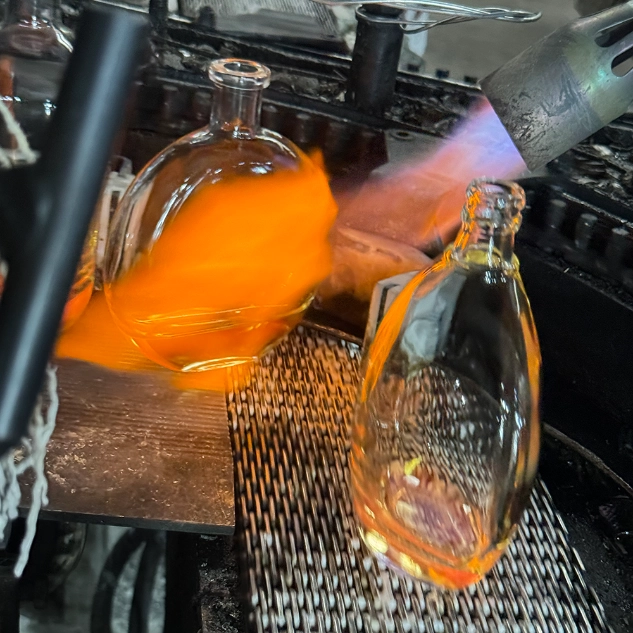
8. Flame Polishing

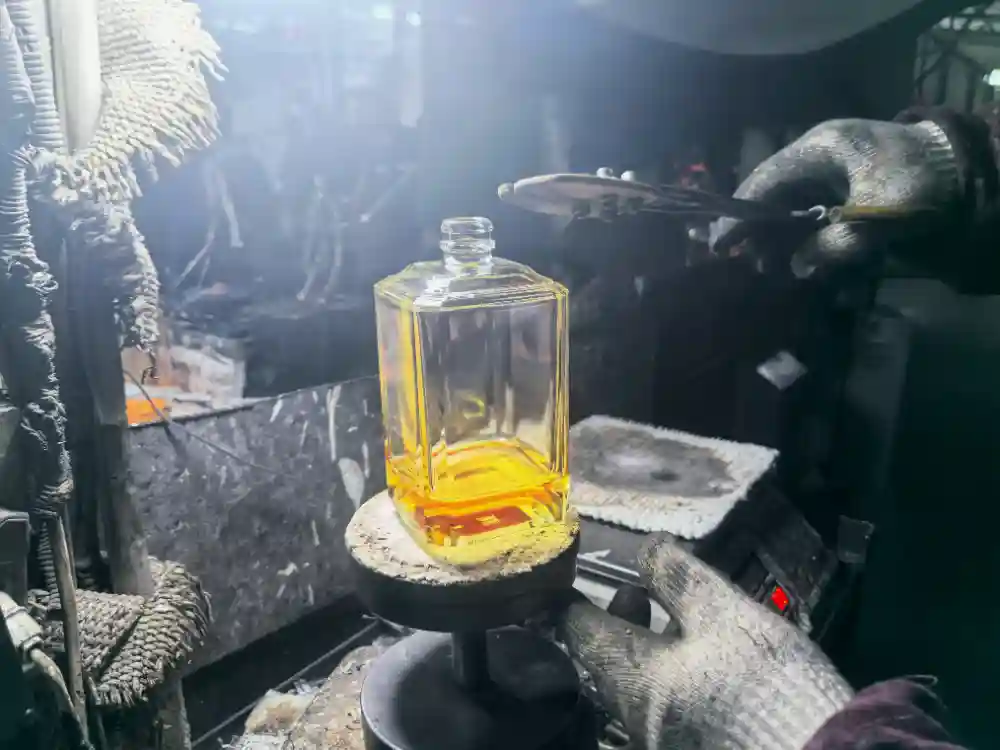
For bottles with high-gloss requirements, a brief flame treatment may be carried out to remove micro-scratches and burrs, enhancing smoothness and sealing adaptability.

Flame_polishing_of_glass_bottle_production_process

9. Glass bottle Enters the Deheating Furnace

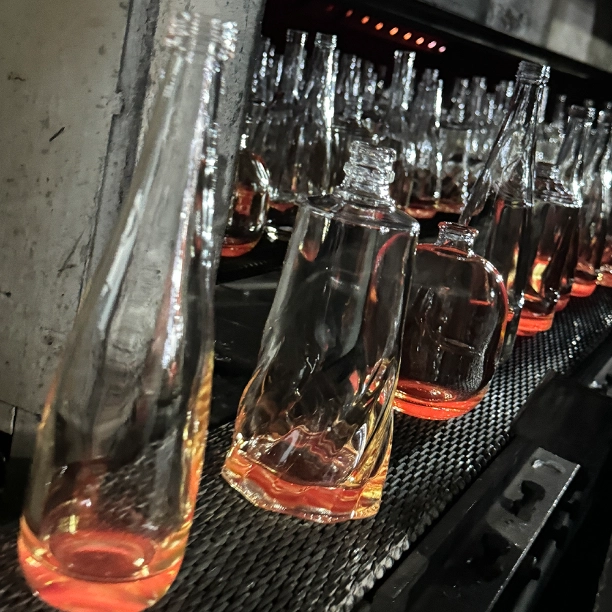
The bottles enter an annealing furnace for controlled heating and cooling. This process relieves internal stress, increasing impact resistance by more than 30% and preventing spontaneous breakage.

Glass_bottle_production_process_products_enter_the_deheating_furnace

10. Glass Bottle Testing

We combine intelligent vision systems with manual inspections. Automated detection can identify bubbles, cracks, or deformations. Technicians will sample the bottles for impact resistance, sealing, and material safety tests. Only bottles that pass all the tests can enter the subsequent processing or packaging stage.

Product_inspection_during_glass_bottle_production_process

11. Packaging

Qualified bottles are packed into cartons or placed on pallets as required. Each package is labeled with specifications, batch number, and production date, and is rechecked before shipment.

Flame_polishing_of_glass_bottle_production_process

Glass Bottle Manufacturing Mold and Custom Services

From sketches to physical samples, Ruisheng Glass provides you with an efficient, reliable, and confidential customized service. Share your ideas – whether it’s a hand – drawn sketch, reference picture, written description, or existing 2D/3D file. Our engineers offer free sketch optimization or professional 3D modeling services to transform your concept into a manufacturable design and provide technical advice.

Our vermicular graphite cast iron molds combine strength and precision, enabling the realization of complex shapes, fine patterns, brand engravings, or logo embeddings.
Sample Production: Physical samples of standard designs can be delivered within 20 working days after drawing confirmation.
Minimum Order Quantity: The minimum order quantity for standard customized orders is 10,000 pieces. For special processes or complex designs, the minimum order quantity can be adjusted according to the order volume and cooperation situation.

Get A Quote
Glass Bottle Manufacturing Mold and Custom Services

Quality Control for Glass Bottle Manufacturing

1. Internal Pressure Test: Sealed bottles are filled with high-pressure air or water to simulate the filling of carbonated beverages or stacking conditions, checking for breakage.

2. Sealing Test: The bottles are filled, inverted, and monitored for 24 hours to ensure the integrity of the seal.

3. Dimensional Accuracy: Laser measurement ensures that key dimensions (such as height, thickness, and bottle mouth size) are within the range of ±0.1mm.

4. Appearance Inspection: Through automated and manual inspections, bottles with bubbles, cracks, scratches, or impurities are eliminated.

5. Material Safety: The glass complies with food-contact standards and does not release harmful substances.

Quality-Control-for-Glass-Bottle-Manufacturing
Quality-Control-for-Glass-Bottle-Manufacturing-ruisheng