


The use of glass is common across various industries. This material is commonly used to make glass bottles, jars, and other containers. What makes glass stand out is its transparency (look) and versatility. Products made of this glass give luxurious vibes. Despite its popularity, many people don’t know: How is glass made?
Various raw materials are melted and shaped to make glass. The glass-making procedure sounds simple, but it is not. There are different steps involved, each requiring specific conditions. In this article, I will discuss the step-by-step process for making glass and the key ingredients used. So, let’s get started.
Raw Material: What is Glass Made Of?
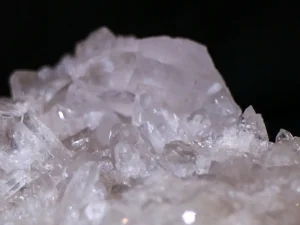
Before discussing glass manufacturing, let’s first look at the key ingredient used to make glass.
Glass is a non-crystalline, highly inert solid material. Its chemical stability ensures it does not affect the taste or purity of its contents. Glass is made of three primary materials: silica, soda ash, and limestone. These materials are mixed, melted, and shaped to form the glass.
Three major ingredients make glass and contribute to its strength. First of these is silica (SiO₂). This raw material makes up 60-75% of the glass mixture, depending on the type of glass. The role of silica is to form the glass structure and impart a transparent appearance to it. The second significant ingredient is soda ash, which is also known as Na₂CO₃.
Interestingly, this raw material is not useful for strengthening the glass. Instead, it helps when you melt the mixture to make glass. As I said earlier, glassmaking involves melting the raw materials. These mixtures require very high temperatures for their melting due to silica’s high melting point. That’s where soda ash comes in handy, as it has a low melting point.
As a result, it reduces or lowers the energy or heat required to melt the raw materials (mixtures). Its proportion is around 12-16%, depending on the type of glass. Limestone is another key raw material, accounting for around 10% of the glass mixture. Some other raw materials are also used in making glass, but their proportions are generally very low.
Here is the table showing different materials with their content:
| Raw Materials | Proportion (%) |
| Silica (SiO₂) | 60–75 |
| Soda Ash (Na₂CO₃) | 12–16 |
| Limestone (CaCO₃) | 5–12 |
| Alumina (Al₂O₃) | 1–3 |
| Cullet (Recycled Glass) | 0–30 (Not mandatory) |
How is Glass Made? Step-by-Step Guide
As previously mentioned, glass is made in different steps. In the section below, I will discuss these steps so you understand the exact glass-making process.
1- Mixing of Raw Materials
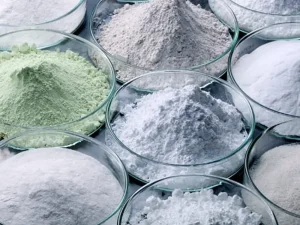
The first step in making glass is to mix all the raw materials. But before mixing, a batch of raw materials is prepared. How? The operators carefully measure the amounts of each raw material to be used in making glass. Remember, there are different types of glass, each requiring a different proportion of raw materials.
These materials include silica, soda ash, limestone, alumina, and cullet. Remember, cullet is a useful raw material because it helps reduce energy use during the melting phase. The recycled glass contains small amounts of silica, soda ash, and limestone. This means using cullet also reduces the need for other raw materials in smaller quantities.
The reason is that, when melted, cullet yields these raw materials because it is recycled glass. After batching, the raw materials are mixed. This mixing is done so that the raw materials fuse perfectly. If the materials are not mixed, they can affect the quality of the glass. Glass made from well-mixed materials is very stable and durable.
2- Melting of Raw Materials in the Furnace
After mixing the raw materials, you’ll have to melt this mixture in the furnace. This is probably the most complicated step, and small mistakes can affect the quality of the glass. The mixture must be heated in a furnace to around 1600 to 1700 degrees Celsius. During melting, the temperature must be consistent to ensure smooth melting.
It is worth noting that materials (a mixture of raw materials) won’t melt immediately. Instead, it can take some time to go from solid to liquid (molten state). During melting, I recommend stirring the molten materials continuously. Why? This stirring helps make the molten material uniform. Additionally, it also ensures the mixture melts evenly, leaving no solid particles behind.
3- Shaping & Forming of Glass Using Molds
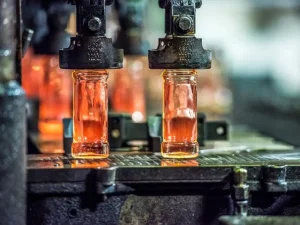
Once the molten glass is ready, the next step is to make different-shaped glass products. Interestingly, there are two types of glass available. One of these is sheet glass used for windows and other products. On the other hand, glass is available in various shapes, such as bottles, containers, jars, and more.
If glass is for windows, then you’ll have to draw the molten glass from the furnace and pour it onto the molten tin. In this way, the glass will float on the surface of the tin and form sheets. These glass sheets can be used for different applications. However, some molten glass is shaped to make different products.
For this, you’ll need to make a pre-made mold identical to the shape of your desired product. Suppose you’re making a custom glass bottle; for this, the mold must be shaped like a bottle. You’ll then carefully pour the molten glass into the mold. There are two main methods used for pouring molten glass into a mold. These include the blow-and-blow and press-and-blow methods.
In the blow-and-blow method, air is used to pour molten glass into the mold. On the other hand, a dedicated plunger pushes the molten material during the press-and-blow method. Remember, the molten glass will cool and solidify inside the mold. During solidification, it adopts the shape of the molds. Upon ejection, you get the exact product, precisely shaped to the mold.
4- Removal of Internal Stresses Using Annealing
When molten glass is in the mold, the outer parts generally cool down quickly. That’s because this part is exposed to air. However, the interior of the molten glass remains hot for a long time. These different temperatures produce internal stresses in the glass. If this stress remains in the glass, it makes it prone to cracking. Therefore, it is crucial to remove internal stress to ensure that glass is reliable for the production of various products.
For this, you’ll have to use an annealing process, which involves slowly cooling down the glass. For this, a lehr (a dedicated annealing oven) is used, where the temperature drops slowly over several hours. You remove the shaped glass from the mold, put it into the lehr, and leave it there for a few hours. In the lehr, the shaped glass will gradually cool to lower temperatures. This lower temperature will relieve the internal stress in the glass, making it less prone to cracking.
5- Final Inspection & Packaging of Glass
The last step in glassmaking is the inspection process, which ensures the glass meets the required quality standards. In the past, manufacturers relied on manual reviews and had to trust their eyes. However, things have changed. Modern inspection uses cameras and lasers. These cameras inspect the glass for various defects, such as bubbles, cracks, and more.
If a crack is small or shallow, manufacturers generally grind or polish the glass. However, if cracks are more severe or bubbles are larger, the glass is not approved for use. Instead, it is sent back to recycling departments, where it is made again. Additionally, manufacturers always check each glass they make for consistent thickness.
After inspection, manufacturers finally pack the glass they make and send it to the customers. This glass packaging is also carefully designed to prevent cracking or breaking during shipping. Manufacturers generally use cartons, bubble wrap, and dividers when shipping glass bottles. First, the team wraps the glass bottles or jars with bubble wrap.
After that, we place each glass product into its designated divider in the carton. Additionally, we use foam padding for all bottles packaged in a single carton. This ensures that glass products, i.e., bottles, jars, etc., don’t break even if they collide during transportation. Manufacturers use safer packaging when they ship glass sheets for windows.
Things to Consider When Manufacturing Glass
In the section below, I discuss the key factors you must consider when manufacturing glass. However, there are some factors that you must consider to achieve the highest quality standard. Here is the list of these factors:
- Prevent Humidity: First, ensure the laboratory where glass is being made does not have high humidity. Why? The reason is that this humidity can mix with the raw materials, affecting the melting phase.
- Maintain Temperature: It is crucial to maintain the correct temperature during the melting phase. If the furnace is older, you must be attentive to ensure it achieves a temperature of around 1700 degrees. If the temperature is below this, the molten glass might become too viscous or not melt well.
- Prevent Impurities: Ensure glass raw materials are free of impurities. The reason is that these impurities can affect the quality and appearance of the final glass. Imagine if the raw materials contain a small amount of iron. This impurity will make the glass appear tinted green rather than fully transparent.
- Focus on Time: Timing is crucial between the melting and shaping steps. During melting, the temperature should remain around 1700 degrees Celsius. After melting, immediately pour molten glass into the mold. There should be no delay between the melting and shaping steps. If there is any delay, the temperature drops, and the molten glass starts to cool, trapping air inside.
- Cullet Size Matters: Manufacturers use cullet as a raw material during glassmaking. However, you must use cullet in very small particles, not in larger sizes. Why? Smaller cullet particles melt more quickly than the larger ones. If you have cullet of larger particles, I recommend crushing them to make smaller pieces.
Conclusion
Let’s conclude: Glass is one of the most widely used materials across industries. These include beverages, pharmaceuticals, decorative products, and more. In fact, glass windows have become very popular worldwide. In fact, the beverage industry seems incomplete without glass bottles and jars.
Manufacturing glass requires certain materials, such as silica, soda ash, limestone, and alumina. These materials are mixed and melted to make molten glass. This molten glass is shaped and formed in a mold to produce glass products of the desired shape. In this article, I have explained the glass manufacturing process in five easy-to-follow steps.