


The use of glass to make different items, such as bottles, jars, and laboratory products, is common. There are various types of glass available in the market. Those types differ in terms of durability and overall performance. However, people constantly compare these two, leading to a debate over borosilicate glass vs. Pyrex.
Undoubtedly, borosilicate glass is very popular; however, there’s a lot of confusion about Pyrex. Many consider it a type of glass with a unique composition compared to borosilicate or soda-lime glass. However, Pyrex is not what people generally think it is. In this article, you’ll get a clear understanding of these two glass types.
What is Borosilicate Glass?
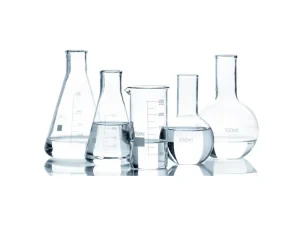
Let’s start with borosilicate glass, as it is the most widely used type.
Borosilicate glass is commonly known as heat-resistant glass. It is made from silica sand, soda ash, and—most importantly—boron trioxide. Boron makes borosilicate glass heat-resistant, since boron itself is very stable. This glass type is pricier than regular types but is resistant to cracking.
Interestingly, this heat-resistant glass is not new and has been in use for centuries. It was invented in the 1800s by a German glassmaker, Otto Schott. However, it was primarily a material used to make laboratory equipment. Its use was more common for making beakers, test tubes, and other such products. The reason for its use in laboratory products was its boron trioxide content.
As a result, borosilicate glass became resistant to thermal shock. Those laboratory items made of this glass were very stable even under high-temperature conditions. Later, manufacturers started using it to make cookware. Borosilicate glass can be used at both very high temperatures and low temperatures.
Even when exposed to temperature shifts from high to low, it won’t crack or warp. Remember, boron in this glass makes it very stable and inert. Suppose you have a borosilicate glass bottle and pour beverages into it. The bottle won’t affect the taste or smell of your drink because this glass is non-reactive.
Production Process of Borosilicate Glass
The production process of borosilicate glass primarily relies on heating. As I mentioned earlier, this glass type contains multiple ingredients. Those include silica sand, soda ash, alumina, and boron trioxide. During production, these elements or raw materials are used and then heated. Before heating, they are mixed in the correct proportion.
The correct proportions of each raw material are crucial for making this type of glass. Even a slight imbalance in the raw materials can result in glass that is not of ideal quality. The mixture is then heated to around 1,650°C. This intense heating melts the raw material mixture, forming a molten liquid glass. The temperature during this process must remain consistent.
Any fluctuations in temperature can lead to uneven melting, affecting the glass’s quality. This molten glass is then shaped into the desired product. For example, manufacturers can use this molten glass to make glass sheets, rolls, or other products. The dedicated shaping machines are used in this step of the glass shaping process.
After shaping, the glass is allowed to cool through the annealing process. This step is critical, as it increases the glass’s strength and reduces brittleness. Once annealed, the glass is ready for real-world use. The heat- and crack-resistant properties of borosilicate glass come from boron trioxide, one of its key raw materials.
Properties of Borosilicate Glass
Borosilicate glass is superior, especially for making bottles, jars, and laboratory items. This is because it offers several unique advantages that regular glass types don’t provide. Check out our previous article comparing regular glass with borosilicate glass. Here are some key properties of this glass type:
1- Exceptional thermal resistance
First, borosilicate glass is highly thermal resistant. This glass can withstand extreme temperatures. You can use it at very high and very low temperatures, and it won’t show any signs of deterioration. This makes this glass type very suitable for making products used at both high and low temperatures. For example, glass bottles made of this material can be placed in refrigerators and direct sunlight.
2- Thermal Shock Resistance
Heat resistance and shock resistance are two different parameters. This resistance indicates that glass remains stable when exposed to sudden temperature change. For example, you use borosilicate glass at high temperatures. All of a sudden, you place it in the refrigerator, where the temperature is very low. This change of temperature won’t cause cracking issues in this glass, indicating its excellent shock resistance.
Quick Note: Borosilicate glass stands out for both thermal and shock resistance. This makes this glass type extremely durable in both indoor and outdoor conditions. That’s why products made of borosilicate glass last longer than those made of regular glass. However, this glass is a bit more brittle than soda-lime glass.
3- Completely inert and safe
As mentioned above, boron is a highly stable element. Its presence in the borosilicate makes it stable and inert. So, it does not leach chemicals into beverages and won’t affect their taste or odor. This is because the boron in this glass makes it non-reactive. This material does not react even if your beverage is slightly more active. So, products such as borosilicate bottles are safe.
What is Pyrex glass?
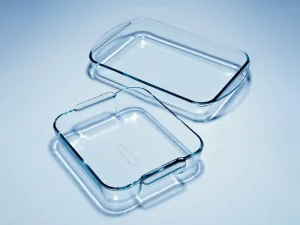
Most people think Pyrex is a special glass. It’s not—it’s just a brand. In fact, Pyrex isn’t a type of glass at all—it’s a brand name that covers two kinds of glass: soda-lime and borosilicate.
In the 1900s, Corning, an American company, started making glass for cookware. This glass was heat-resistant, and products made from this glass were used in the oven. However, the Corning Company used borosilicate glass but named it Pyrex. The complete production process was the same as that of borosilicate glass discussed above.
Over time, this Pyrex became popular, and people started calling it Pyrex glass. Actually, it was a borosilicate glass, branded as Pyrex. Later, the Corning company was sold, with two parties buying its divisions. The USA-based brand ‘Corelle’ bought some part of this company, while other divisions were sold to European companies.
The exact name of that European company is “International Cookware.” Both the USA and European companies produce Pyrex, but they use different types of glass. The U.S. version (now made by Corelle Brands) uses tempered soda-lime glass to make Pyrex for cookware. On the other hand, European companies use borosilicate glass for making Pyrex.
How to Identify the Composition of Pyrex?
The USA-based company offers Pyrex-made products but uses soda-lime glass. This Pyrex is not of excellent quality and is not heat-resistant. If it says “Made in USA,” it’s soda-lime glass, not borosilicate.
On the other hand, European companies also make Pyrex but use borosilicate glass. If you use a Pyrex product with no “Made in USA” branding, it means it’s borosilicate glass. This is the first way to identify what glass type is used in a specific Pyrex. One more way to know what Pyrex is made of is how it is written.
The companies mentioned above use two versions: “Pyrex” and “PYREX.” European Pyrex is usually written in all capitals (PYREX); American Pyrex uses lowercase (pyrex). Simply put: “Pyrex” is the trademark of an American brand. “PYREX” is used by a European brand. Both of these companies use Pyrex in making cookware. In other words, they use Pyrex for the production of glassware. However, this Pyrex can be either borosilicate or tempered soda-lime glass. I recommend choosing Pyrex-branded “Made in Europe,” as it is actually borosilicate.
Conclusion
Borosilicate glass has earned its reputation for good reason. From smartphones to glass products, including bottles, this material is everywhere. However, this material is often compared with Pyrex. Many misinterpret Pyrex as a unique material, which is absolutely wrong.
In this article, I have discussed everything about both borosilicate and Pyrex glass. You should not consider Pyrex a separate material; it is also made of borosilicate or soda-lime glass. If Pyrex is from the USA, it is soda-lime glass. However, European Pyrex is made of borosilicate glass. This material has properties of either soda-lime or borosilicate, depending on where it comes from.