
Sometimes you try to close a bottle with a cap that looks the right size, but it doesn’t fit. It might feel loose, get stuck halfway, or seem to close but still allow the liquid to leak. This is one of the most common problems in bottle packaging you will come across. The main reason lies in small details, like cap finishes and threads on the bottle neck and cap. That’s where GPI finishes and GPI threads come into play. If you are hearing these terms for the first time, they might sound technical. But there is no need to worry! In this guide, I’ll cover everything you need to know about GPI thread standards. You will learn how to match a bottle finish with a screw cap. So let’s get started.
What are GPI Thread Standards?

GPI stands for the Glass Packaging Institute. However, it refers to the dimensional standards for glass container finishes. Together, GPI thread standards are guidelines that describe the size and shape of a bottle’s threaded finish. They help bottle and cap manufacturers use the same basic measurements when designing their products.
In other words, GPI standards describe a glass bottle’s neck or finish. Remember, dGPI is the dimensional side of the GPI system, not a separate standard. It provides more detail on bottle finishes. dGPI focuses mainly on the actual measurements of the bottle finish.
These measurements include the neck size, thread, and finish height. These measurements help manufacturers make a bottle and screw cap that fit together. When a manufacturer makes a cap, it must match the bottle thread in many details, not only width.
For example, it should also match the bottle neck in size, threads, and sealing design and method. That’s why, even if a cap has the same diameter as the bottle’s neck, it still won’t fit if its threads or sealing parts differ. That’s where GPI standards make things easier. They give glass bottle manufacturers a clear, easy way to identify the bottle finish in detail. With that information, they can choose a suitable screw cap.
What Does a GPI Code Mean on a Bottle?
A GPI code is a number that identifies a bottle’s finish, like its thread size, diameter, and more. When you see GPI followed by numbers on a bottle, it is the code telling you about the bottle’s neck finish. Neck finish means the top part of the bottle where the screw cap generally sits. This finish often includes the opening, threads, and other parts that help the cap fit and seal.
For example, you see a GPI code such as 28-410. Here, the number “28” refers to the nominal diameter of the bottle finish in millimeters. However, the number “410” means the specific finish style and thread arrangement of that bottle. So this full code gives you more detail than just the bottle’s 28 mm neck. This detail matters because two liquor bottles with the same diameter can have different thread designs. Different thread designs won’t allow the cap to form a proper seal.
How to Match Bottle Finish with Screw Cap? Step-by-Step
Now that you understand what GPI standards are and what its code tells you. Right? Next, the question is how you will match the bottle finish with a screw cap using this standard. It might feel like a technical process at first. To make things easier, I’ll walk you through a step-by-step process to help you avoid ending up with the wrong bottle cap.
Step 1: Identify the Finish Diameter
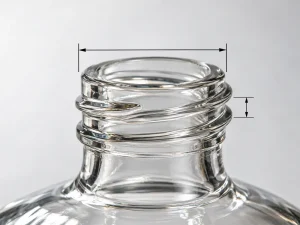
The first step when matching a bottle finish with a screw cap is to measure its finish diameter. Finish diameter is the approximate width of the bottle neck where the cap will sit. Suppose a bottle has a finish diameter of 28 mm; that means its neck size is designed around a 28 mm nominal size. So the screw cap must have an inner size that works with this finish. But do not stop at the number 28. A 28 mm bottle might have different thread styles. So a random 28 mm cap will be the wrong choice. In that case, reading the full GPI code will help you choose the right screw cap finish.
Step 2: Check the Thread Style
The threads are the raised lines around the bottle neck. These lines allow a screw cap to twist into place. This part is very tricky because threads look almost the same. But in reality, there is a huge difference in their shape, position, and dimensions. If the bottle and cap threads don’t match, the cap will turn poorly, stop before it fully closes, or cross-thread. So the cap’s thread must match the bottle neck thread. For this, check the exact bottle finish specification in the GPI specifications.
Step 3: Find Out the Finish Height
A diameter of the bottle finish only gives you details of how wide a bottle finish is. It does not give any information about how tall that finish is. That’s where finish height becomes crucial. It is basically the vertical distance from the top of the bottle finish down to the specified point of the neck.
Or we can say that it is the vertical space that the cap needs to cover when you screw it onto the bottle. Checking this height is important. Why? Because even if the bottle and cap have the same diameter and matching threads, the cap still has to sit at the right height to create a seal. If the finish is too tall or too short for the cap, it will sit in the wrong position. So, when matching a cap, check the finish height in the bottle’s specification.
Step 4: Confirm the Sealing Method
The seal is the part that closes the small gap between the cap and bottle finish. It is possible that the bottle and screw cap might have different sealing methods. For example, some screw caps use an inner liner. At the same time, some use a plug or another sealing surface that presses against the bottle opening. If it doesn’t match the bottle’s thread-sealing method, leakage is possible.
So ensure the bottle neck and bottle cap use the same sealing method. What sealing method you choose for both mainly depends on the bottle design and the product inside it. Suppose there is a liquid product that demands a seal that must keep the contents from leaking during handling and transport. In that case, do not check only whether the cap screws on smoothly. Make sure the sealing part also works with the bottle finish.
Step 5: Check the Cap Overall Design
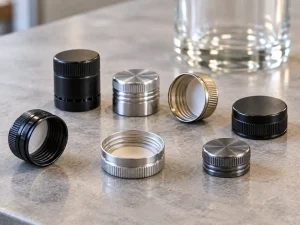
Now it comes to the last step, which is to look at the whole cap, not just its thread, size, or style. In this step, you have to check its inside shape, depth, sealing part, and the lower part of the cap that sits around the bottle neck. These small details are what change how the cap sits and closes.
For example, a cap might have the right diameter and thread but still fail to seal. This is because its inside design does not suit the bottle finish. Some caps also have a tamper-evident band. This band must fit properly around the bottle neck. That is why it is always better to try the cap on the actual bottle before buying a large quantity.
How Can You Read a GPI Finish Code?
At first, reading a GPI code might feel like a skill requiring practice, especially for beginners. However, each code has a simple explanation that you can get very easily. You’ll usually see codes like 28-410 or 38-400 on a bottle specification. The first number tells you the nominal width of the bottle finish in millimeters. The second number indicates the finish type and thread design.
Together, these numbers give you a quick idea of what kind of bottle neck you are dealing with.
Suppose you see a 28-410 GPI code. Here, the 28 refers to the nominal finish diameter. The 410 is what identifies the particular finish style. This second part is more important than the first. Two whiskey bottles might both have a 28 mm finish, but using different thread designs means a different second number.
If you pick a cap just because it says “28 mm,” it will not screw on correctly. So, always look at the complete code, not just the first number. Once you know the GPI code, choosing a cap is much easier. Just give the code to a cap supplier, and they will provide a closure that matches those specifications.
What Happens If the Bottle and Cap Do Not Match?
When the bottle and cap do not match, you will face several problems. First, you might find the cap will not screw on at all. In many cases, the cap might screw on but still leave gaps that lead to leakage. This can be due to the wrong diameter, thread style, finish height, or sealing design.
When the bottle and cap do not match, problems also arise during filling, storage, and transportation. If the cap is too loose, it will come off, and when bottles are moved around, they may spill their contents. However, if the cap is too tight, it becomes difficult to apply or remove, and this eventually damages the threads.
There is also the issue of product quality and customer experience. Nobody wants to open a bottle that is extremely hard to twist or find it leaked inside a bag. The product may be fine, but packaging issues can still cause trouble and affect brand reputation. That’s why you should check bottle and cap matching before mass production. The best approach is to test a few bottles with the actual caps to help find fitting and sealing problems early.
Frequently Asked Questions
Is a GPI thread the same as a screw thread of a bottle or cap?
No, they are not the same. A GPI thread is part of a bottle finish standard that describes the bottle neck and its thread design. A screw thread is a more general term for the raised lines that let one part screw into another. So, a GPI finish can have a screw thread, but GPI gives more specific information about that finish.
Does a 28 mm cap fit every 28 mm bottle?
No. 28 mm only tells you the nominal diameter, not the complete finish design. Two 28 mm bottles might have different thread styles or other dimensions. A cap therefore fits one 28 mm bottle but not another.
Why does my screw cap fit but still leak?
A screw cap fits the bottle but still leaks if the sealing parts do not match. The thread keeps the cap attached, but the seal is actually what helps stop the liquid from escaping. A wrong liner, poor cap design, or incorrect finish dimensions eventually cause small gaps that cause leakage.
Can I use a different GPI cap on my bottle?
You can, but only if the cap matches your bottle finish. Check the cap’s diameter, thread style, finish height, and sealing method first. A cap that looks similar can still be too loose, too tight, or cause leaks. So when possible, test the cap on your bottle before using it in large quantities.
Conclusion
For a secure seal, the screw cap must match the bottle threads. If not, it can create a loose or too-tight seal that may damage the bottle or cause leakage. That’s where the GPI standard comes into play. In this guide, I have discussed how these standards specify the bottle and cap finish. It helps you understand the bottle neck and find a cap made for that finish. For this, start with the bottle’s full GPI finish code. Then compare it with the cap specification and confirm the order with the supplier.
