
When you look at any type of glass bottle, it might seem like a simple product. But in reality, making this bottle required a highly controlled, careful manufacturing process. Even small changes in the way the glass is formed can affect the bottle’s weight, thickness, strength, and quality. There are many ways to make glass bottles. Among those, press and blow and blow and blow are the most widely used and trusted ones. Both methods start with molten glass and use molds. However, there are many other aspects in which both vary. This raises a debate: Press and blow vs blow and blow – how do these production methods differ? If you are new to this topic, do not worry; in this guide, I will compare the two methods and help you fully understand them. So let’s get started.
Overview of Press and Blow vs. Blow and Blow
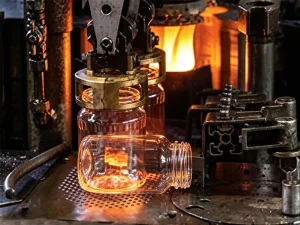
Press and Blow is a method in which a measured amount of molten glass is first shaped with the help of a mechanical plunger. This creates the first hollow shape, called a parison. The parison is then moved into another mold. There, compressed air expands the hot glass until it takes the shape of the final bottle.
In simple terms, press and blow means pressing the glass first and blowing it afterward. A mechanical plunger plays a crucial role. It is a solid, shaped tool that enters the molten glass and pushes it into the desired shape during the first stage of glass bottle production. With this tool, manufacturers gain greater control over the distribution of hot glass. It helps create a more even thickness of glass bottles.
Blow and Blow is another method where compressed air forms the glass during both main shaping stages. First, the hot glass is placed into a blank mold and air creates the initial hollow shape. This partially formed shape is then moved into the final mold. Here, the air is used again to expand the glass and create the finished bottle.
So basically, in the blow-and-blow method, blowing takes place to create the first and final shape. So, unlike press-and-blow, there is no role for a mechanical plunger. Instead, air does everything. The first blow creates the parison. However, the second blow expands it against the final mold. This is a well-established method, especially for many narrow-neck glass bottles.
Press and Blow vs Blow and Blow: Key Differences
Now you have a basic idea about how each glass bottle production method works. Right? For many beginners, it might be tricky to differentiate them, as both create bottles. However, they don’t do this in the same way. So let’s dive in and explore the main differences between press and blow and blow and blow.
1- Glass Distribution & Wall Thickness
The first major difference between blow and blow and press and blow is how the glass is spread throughout the bottle. If we discuss press and blow, this distribution is more even. The reason lies in the mechanical plunger. It helps move the glass into the right areas. Glass bottle manufacturers have more control over where the glass goes in different parts of the bottle. As a result, the wall thickness becomes more uniform, with no gaps.
However, glass distribution in blow-and-blow is controlled by air pressure. Air is used to create the first shape instead of a plunger. The glass is then blown again inside the final mold to make the bottle. This gives less direct control over glass distribution. As a result, the wall thickness is sometimes uneven, unlike in press-and-blow.
2- Lightweighting Potential & Efficiency
Lightweighting means making a glass bottle lighter by using less glass. Both production methods have different lightweighting potential. For instance, in the blow-and-blow method, it is harder to reduce the glass weight as much. In this method, air is used to create the first shape. That’s why manufacturers have less direct control over how the glass moves at this stage.
On the other hand, the press-and-blow method is very helpful for making lighter bottles. This is because the plunger controls where the hot glass goes during the first stage. It allows manufacturers to put more glass in areas that need strength and less glass in areas that do not need as much. It means the bottle gets no unnecessary weight. NNPB (Narrow-Neck Press and Blow) is especially useful for making lightweight narrow-neck bottles.
3- Container Types & Designs Flexibility
In terms of container design, press-and-blow offers more flexibility. How? Actually, it uses pressing actions that help make specific designs. So it can make containers such as wide-mouth jars and custom glass bottles. At the same time, this method can produce narrow-neck bottles via the NNPB process.
However, the Blow-and-Blow method is traditionally well suited to narrow-neck bottles. In this method, air is used to create the first shape and then used again to form the final container. That’s why it makes bottles for drinks, food items, medicines, and other products that need a smaller opening.
4- Neck Formation & Finish Quality
The neck is the part at the top of a bottle that connects the main body to the opening. The finish is the top edge of the bottle where the cap or other closure is fitted. Both methods, no doubt, produce high-quality necks and finishes. However, the major difference lies in the overall control. As I said above, blow and blow uses air in both shape-forming stages.
That’s why manufacturers have less control over glass distribution. This can sometimes compromise the finish, but overall it produces a high-quality neck and finish. On the flip side, press and blow gives more direct control of glass around the neck during initial forming. Manufacturers can carefully make the neck and finish design they want.
5- Tooling Requirements & Equipment Complexity
The tools and parts used by the machine to shape the hot glass come in tooling. Interestingly, both methods use molds to shape the glass bottles. However, the blow-and-blow method has very simple tooling requirements. It uses a mold and a compressor as the main tools. The first shape is made using compressed air.
There is no need for any additional tools. It means the system has fewer mechanical parts in the first stage, making it less complex overall. In contrast, press-and-blow has slightly more tooling requirements. It uses a mechanical plunger along with a mold and compressed air. This extra moving part needs proper adjustment, cooling, maintenance, and control. All this makes the equipment and tooling a little more complex.
6- Process Control & Consistency
In terms of process control, the press-and-blow production method is the clear winner. Earlier I said that it uses a mechanical plunger. This part is what helps control the hot glass during the first forming stage. Manufacturers have more direct control over how the glass is arranged during the first stage. As a result, the consistency of glass distribution increases, producing more uniform bottles.
On the flip side, in the blow-and-blow method, air is used during both forming stages. The first blow forms the initial shape, and the second forms the final bottle. This means manufacturers need to carefully control air pressure, gob weight, and mold conditions. They don’t have direct control over the distribution of the hot glass. They need to control all these factors to produce uniform, cost-effective glass bottles.
7- Production Speed & Efficiency
Production speed and efficiency are other areas where both methods show a clear difference. There is no doubt that both can produce large numbers of glass bottles. However, press-and-blow has an advantage when it comes to using material efficiently. Its plunger helps control the hot glass during the first stage.
This allows manufacturers to use the glass where it is actually needed. There is less material waste, which makes it more efficient. In contrast, blow and blow can also produce many bottles simultaneously, but its material usage efficiency is low. Why? Air is used to create the first shape. Manufacturers don’t have any control over material placement at this stage. So making lightweight glass with equal strength becomes difficult with this method.
8- Strength & Overall Quality
Now, it comes down to the strength and overall quality of the glass bottle that sets both methods apart. In this regard, the blow-and-blow method is slightly compromised. It generally provides less direct control over the glass’s initial movement. As a result, it becomes harder to achieve very precise glass distribution in some designs.
So bottles might not be of higher quality and strength. However, the press-and-blow method stands out for forming high-quality, strong glass bottles. It helps put more glass in areas where the bottle needs extra support. At the same time, it also helps avoid unnecessary glass in other areas. Consequently, the final bottle meets the required strength and quality standards.
9- Applications & Suitability
Due to variation in many aspects, the usability of both glass production methods also varies. The press-and-blow method is used when manufacturers want control and lightweight bottles. That’s why it is used to make:
- Glass jars
- Wide-mouth containers
- Food jars
- Cosmetic containers
- Pharmaceutical containers
- Lightweight glass bottles
- Narrow-neck bottles made with the NNPB process
On the other hand, Blow and Blow is especially well suited to narrow-neck bottles. This method has been used for centuries to make:
- Narrow-neck glass bottles
- Beverage bottles
- Food and condiment bottles
- Medicine bottles
- Liquor and spirit bottles
- Standard glass bottles
- High-volume bottle production
10- Cost & Affordability
Lastly, the overall cost also varies between the blow-and-blow and press-and-blow methods. Generally, Press and Blow can have higher tooling and equipment costs. The reason is that it uses an additional part: a mechanical plunger. It needs proper maintenance and adjustment. However, it saves money over time by helping manufacturers use less glass and produce lighter bottles.
Conversely, the blow-and-blow method is very affordable due to a simpler initial forming setup. It uses compressed air to form the parison instead of a mechanical plunger. This can make it an attractive option for manufacturers already equipped for this process. But remember, it may require more glass for some bottle designs, which can increase costs later.
Conclusion: Press and Blow vs Blow Blow, Which One You Should Choose?
Both the blow-and-blow and press-and-blow methods are used worldwide. Therefore, there is no single best choice for any project. The final choice depends on what you need from the glass bottle. To make this decision easier, I have discussed the main differences between these two glass-making methods in this guide. If your main goals are control, lightweight bottles, and efficient use of material, press-and-blow can be the better choice.
But remember, its initial equipment setup costs are higher. On the other hand, blow-and-blow is a good choice for narrow-neck bottles and large-scale production. However, keep in mind that this method doesn’t give you direct control over glass distribution at the first stage. So always keep your project needs in mind and then choose the most reliable method.
